Retail businesses operate in one of the most dynamic and highly regulated sectors in India. From managing employees across multiple store locations to complying with state-specific labour laws, retailers face a constant challenge in keeping up with changing regulations. A missed filing, expired license, incorrect wage payment, or delayed statutory submission can result in penalties, legal disputes, and reputational damage.
As labour regulations continue to evolve under India's labour codes, retail organizations need a reliable way to monitor and manage compliance obligations. This is where labour law compliance services and software become essential.
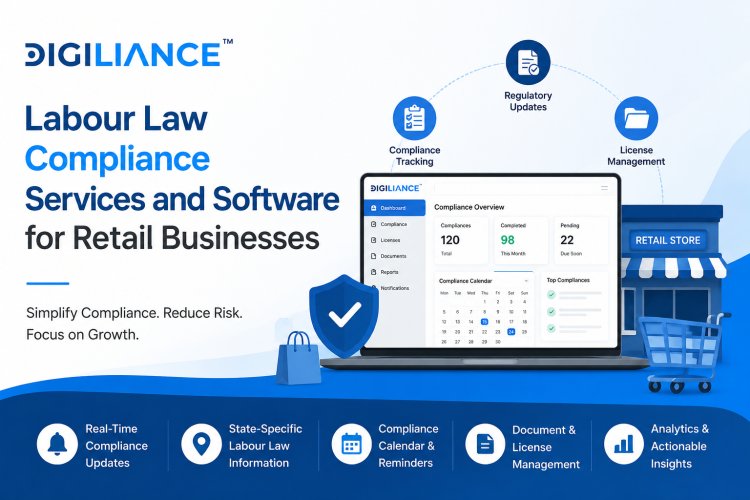
Modern compliance platforms help retail businesses simplify regulatory management, track statutory requirements, maintain documentation, and stay informed about legislative updates. Instead of relying on manual spreadsheets and fragmented processes, retailers can centralize compliance activities through a single platform.
This guide explains how labour law compliance services and software support retail businesses, the key compliance challenges retailers face, and how platforms like Digiliance help organizations maintain compliance while focusing on growth and customer experience.
Book A Demo For Labour Law Compliance Software
What Is Labour Law Compliance for Retail Businesses?
Labour law compliance refers to the process of following all applicable employment and workplace regulations established by central and state governments.
For retail businesses, compliance requirements often include:
- Minimum wage compliance
- Provident Fund (PF) compliance
- Employee State Insurance (ESI) compliance
- Professional Tax compliance
- Labour Welfare Fund (LWF) compliance
- Shop and Establishment Act compliance
- Working hours management
- Leave policy compliance
- Overtime payment regulations
- Contract labour compliance
- Statutory license management
- Employee record maintenance
Retail organizations often employ large workforces spread across different cities and states. Since labour laws vary between jurisdictions, businesses must ensure compliance at every location.
Failure to comply can lead to:
- Financial penalties
- Legal notices
- License suspension
- Business disruptions
- Increased compliance costs
Why Labour Law Compliance Is Critical for Retail Businesses
Retail businesses depend heavily on frontline employees, store managers, warehouse workers, delivery personnel, and support staff. Managing such a workforce requires strict adherence to labour regulations.
Avoid Legal Penalties
Government authorities conduct inspections and audits to verify compliance. Missing records, expired licenses, or incorrect wage calculations can result in substantial penalties.
Maintaining continuous compliance helps retailers reduce legal exposure and operational risk.
Protect Employee Rights
Labour laws exist to safeguard employee welfare. Compliance ensures workers receive fair wages, statutory benefits, leaves, and safe working conditions.
A compliant workplace often experiences lower employee disputes and improved workforce satisfaction.
Support Business Expansion
As retailers expand into new states, compliance obligations become more complex. State-specific regulations regarding minimum wages, holidays, professional tax, and labour welfare contributions must be managed accurately.
A structured compliance system enables smooth business growth across multiple locations.
Improve Operational Efficiency
Manual compliance tracking consumes significant administrative resources. Automated compliance software helps businesses reduce paperwork and improve productivity.
Common Labour Compliance Challenges in the Retail Sector
Retail businesses encounter several compliance challenges due to workforce size, geographic spread, and changing regulations.
Managing Multi-State Compliance
Each Indian state has unique labour regulations, wage structures, professional tax requirements, and holiday schedules.
Retail chains operating across multiple states must monitor:
- State minimum wage notifications
- Labour Welfare Fund contributions
- Professional tax updates
- Holiday regulations
- Local licensing requirements
Tracking these manually becomes increasingly difficult as the business grows.
Monitoring Frequent Regulatory Changes
Labour laws and statutory requirements are updated regularly.
Businesses often struggle to:
- Track amendments
- Understand new obligations
- Implement changes on time
- Maintain updated compliance records
Without a reliable update mechanism, organizations risk unknowingly violating regulations.
License and Document Management
Retail businesses require multiple licenses and registrations.
Examples include:
- Shop and Establishment registration
- Labour licenses
- Trade licenses
- Professional tax registrations
Managing renewals across multiple stores can become overwhelming without centralized tracking.
Compliance Reporting
Retail organizations frequently need compliance reports for:
- Internal audits
- Management reviews
- Regulatory inspections
- Corporate governance requirements
Manual report generation often leads to delays and inaccuracies.
How Labour Law Compliance Software Helps Retail Businesses
Labour law compliance software provides a centralized system for managing compliance activities across locations and departments.
Real-Time Compliance Tracking
Modern compliance software enables businesses to track obligations, deadlines, and statutory requirements from a single dashboard.
Key benefits include:
- Visibility into compliance status
- Deadline monitoring
- Reduced manual effort
- Improved accountability
Retail managers can quickly identify pending actions and address issues before they become violations.
Automated Compliance Monitoring
Compliance software continuously tracks regulatory requirements and helps businesses stay informed about legislative updates.
This reduces dependence on manual monitoring and external consultants for routine compliance activities.
Centralized Documentation
A compliance platform serves as a secure repository for:
- Licenses
- Registrations
- Employee records
- Statutory forms
- Government notifications
Centralized access improves document control and audit readiness.
Better Decision-Making Through Analytics
Compliance analytics help management understand:
- Compliance performance
- Risk areas
- Upcoming deadlines
- Regulatory trends
These insights support proactive compliance planning.
Essential Features Retail Businesses Should Look For
Choosing the right labour law compliance software requires evaluating key features relevant to retail operations.
State-Specific Compliance Management
The platform should support compliance requirements across all Indian states.
Important capabilities include:
- State-wise minimum wage tracking
- Professional tax updates
- Labour Welfare Fund rates
- Holiday lists
- State-specific regulations
Compliance Calendar
A compliance calendar helps businesses monitor important dates and statutory deadlines.
This feature ensures timely filing, payment, and reporting activities.
License Management
License management tools help organizations:
- Track expiry dates
- Schedule renewals
- Store license copies
- Maintain compliance records
This minimizes the risk of operating with expired licenses.
Regulatory Update Notifications
Retail businesses need timely alerts regarding:
- Labour code amendments
- Wage revisions
- Government notifications
- Policy changes
Instant updates improve preparedness and compliance accuracy.
Reporting and Analytics
Comprehensive reporting capabilities enable organizations to generate compliance summaries, audit reports, and management dashboards.
Labour Law Compliance Services vs Compliance Software
Many retail businesses rely on labour law compliance services, while others use compliance software. The most effective approach often combines both.
Labour Law Compliance Services
Compliance services typically include:
- Compliance assessments
- Regulatory guidance
- Audit support
- Documentation review
- Advisory assistance
These services help businesses understand and address compliance obligations.
Labour Law Compliance Software
Software solutions provide:
- Compliance tracking
- Document management
- Regulatory updates
- Compliance calendars
- Reporting tools
Software improves efficiency and reduces manual effort.
Combining Services and Technology
Retail businesses achieve better outcomes when expert guidance is supported by a technology platform that automates routine compliance management.
This combination improves accuracy, visibility, and operational control.
How Digiliance Supports Retail Compliance Management
Digiliance was launched by Spectra to simplify labour law compliance management for businesses across India.
The platform is designed to help organizations plan, track, and manage compliance requirements efficiently while staying aligned with changing labour regulations.
Real-Time Compliance Updates
Digiliance provides continuous updates related to:
- Labour codes
- Labour law amendments
- Regulatory changes
- Statutory requirements
This helps retail businesses stay informed and compliant.
State-Specific Compliance Information
Retail organizations operating across multiple states can access:
- Minimum wage rates
- Professional tax rates
- Labour Welfare Fund rates
- Leave policies
- Holiday schedules
This reduces the complexity of multi-state compliance management.
Compliance Tracking and Management
The platform enables businesses to monitor compliance activities through a centralized system, helping reduce the risk of missed deadlines and regulatory violations.
License and Document Management
Digiliance supports:
- License tracking
- Renewal monitoring
- Document storage
- Compliance documentation management
This simplifies administrative processes and improves audit readiness.
Analytics and Compliance Insights
Businesses gain visibility into compliance performance through detailed reports and dashboards that support informed decision-making.
India's Largest Labour Law Resource Hub for Retail Businesses
One of the most valuable aspects of Digiliance is its extensive labour law resource hub.
Retail businesses can access:
- Central labour laws
- State labour laws
- Statutory forms
- Compliance calendars
- Professional tax information
- Minimum wage updates
- Labour Welfare Fund details
- Government compliance links
- Holiday lists
Having these resources in a single location saves time and improves compliance management efficiency.
Future of Labour Compliance in the Retail Industry
As labour regulations continue to evolve, compliance management will become increasingly technology-driven.
Retail businesses are expected to adopt digital compliance systems that provide:
- Continuous monitoring
- Centralized compliance management
- Automated reminders
- Digital documentation
- Regulatory intelligence
Organizations that embrace compliance technology today will be better positioned to manage risk, maintain regulatory compliance, and support long-term business growth.
Frequently Asked Questions
What is labour law compliance software?
Labour law compliance software is a digital platform that helps businesses track, manage, and monitor labour law requirements, statutory filings, licenses, and regulatory updates.
Why do retail businesses need labour compliance management?
Retail businesses often operate across multiple locations with large workforces. Compliance management helps ensure adherence to labour laws, reduces legal risks, and improves operational efficiency.
How does labour law compliance software reduce compliance risks?
The software provides compliance tracking, deadline monitoring, regulatory updates, and document management, helping businesses avoid missed obligations and penalties.
What labour laws are important for retail businesses in India?
Key regulations include minimum wage laws, Provident Fund regulations, Employee State Insurance requirements, Professional Tax rules, Labour Welfare Fund contributions, and Shop and Establishment Act compliance.
Can compliance software help businesses operating in multiple states?
Yes. Advanced compliance platforms provide state-specific compliance information, including wage rates, professional tax rules, holiday lists, and regulatory updates.
Conclusion
Labour law compliance is a critical responsibility for every retail business in India. Managing statutory obligations across multiple stores, states, and employee categories can quickly become complex when handled manually. Compliance failures can result in penalties, operational disruptions, and legal challenges that impact business performance.
Labour law compliance services and software provide a practical solution by helping retailers centralize compliance management, track regulatory changes, manage licenses, and maintain accurate records. Platforms like Digiliance simplify compliance through real-time updates, state-specific regulatory information, compliance calendars, analytics, and document management tools.
By adopting a structured compliance approach supported by technology, retail businesses can reduce risk, improve operational efficiency, and focus on delivering better customer experiences while maintaining full compliance with India's evolving labour laws.