
Contractor Compliance Services for Principal Employers
Stay Compliant with Contractor Labour Compliance. Anytime. AnywhereWhen you engage contractors at a factory, site or branch, their compliance can become your risk. Say a contractor misses a wage payment or lets a licence lapse. The principal employer may be held answerable for it under applicable law. Digiliance contractor compliance services close that gap by checking every contractor every month. We look at licence validity, wages paid against the state minimum, PF and ESI challans, bonus, welfare facilities and safety records, and keep the proof for each site ready before an inspector asks for it.
-
 Comprehensive contractor compliance ensures adherence to labour laws and regulations
-
Monthly checks that contractors have paid PF, ESI and statutory dues
-
Proper wage disbursements and bonuses ensure legal compliance
-
Digiliance oversees welfare facilities, leave policies and working conditions
-
Minimize legal risks and penalties with expert contractor compliance services

What We Offer in Contract Labour Compliance Services
Comprehensive Contractor Labour Compliance Services: Your Trusted Partner in Legal Adherence
-
Statutory Payments
Ensure compliance with PF, ESI, and legal payment obligations.
-
Timely Disbursements
We check every month that contractors have paid their workers on time.
-
Wage Enforcement
Ensure contractors meet state-mandated minimum wage standards.
-
Bonus Compliance
Ensure contractors provide statutory bonuses as per legal requirements.
-
Welfare Facilities
Ensure contractors offer essential worker facilities like water and restrooms.
-
Leave Compliance
Ensure contractors follow legal leave entitlements and working hour regulations.
-
Safety Standards
Ensure contractors adhere to safety regulations for a secure work environment.
-
Contractor Licensing
Verify contractors are registered and licensed with authorities.
-
Compliance Monitoring
Continuously monitor contractors to ensure adherence to labour laws.
What the principal employer is responsible for
The obligation that surprises most employers is wages. If a contractor fails to pay wages to contract workers or makes a short payment, the principal employer may be liable to pay the unpaid amount and recover it from the contractor, as provided under applicable law.
The principal employer also has specific responsibilities relating to contract workers’ health, safety and welfare. Applicable EPF and ESI obligations should be assessed separately under relevant laws. Maintaining accurate wage records and compliance documents helps businesses demonstrate compliance.
What changed for contract labour under the new code
The Occupational Safety, Health and Working Conditions Code, 2020 introduces changes to contract labour provisions.
- The threshold for the specific contract labour provisions is generally 50 contract workers, subject to applicable conditions and exceptions.
- The Code provides for a common licence for eligible contractors, with a five-year validity period, subject to applicable requirements. It also aims to simplify registration requirements.
- Businesses should verify applicable Central and State rules before making compliance changes.
Read more in our guide to the new labour codes.
What we collect from every contractor, every month
| Document | Why it matters |
|---|---|
| Contractor licence and registration certificate | Checked for validity and for the number of workers allowed |
| Wage register and attendance record | Wages compared against the state-wise minimum wages for that category |
| Wage slips and bank transfer proof | Evidence that wages reached the worker, not only that they were declared |
| PF ECR and payment challan | Contributions deposited for the workers who actually worked that month |
| ESI contribution challan | Same check, and cover for accidents at site. See our ESI compliance guide |
| Bonus payment record | Statutory bonus paid where it is due |
| Workmen compensation or insurance policy | Cover in place for the contract workforce |
| Induction and safety training records | Required at factories and sites, and the first thing asked for after an incident |
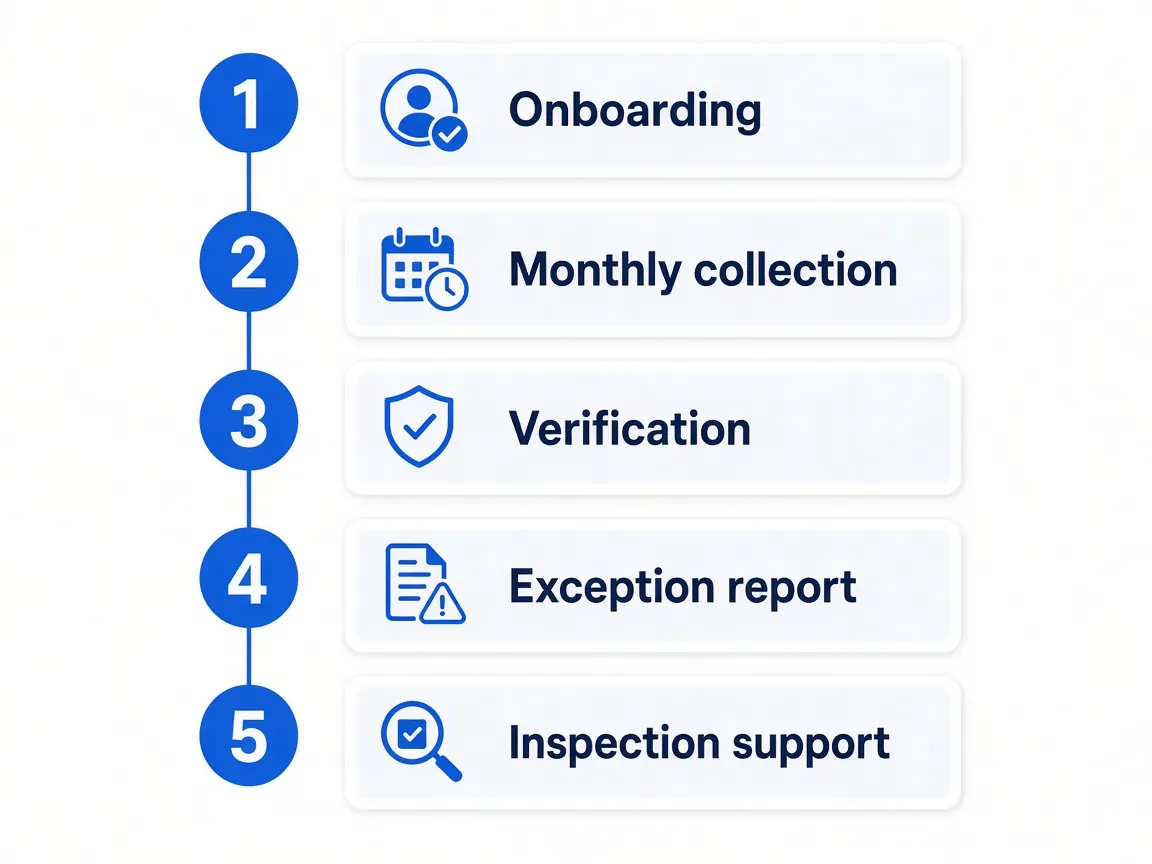
How contractor compliance works with Digiliance
- Onboarding. We verify each contractor’s licence, registrations and worker count before work starts.
- Monthly collection. Contractors upload their documents themselves, site by site, on our labour law compliance software, so your team is not chasing files.
- Verification. We check each document against the wage rates, headcount and due dates that apply to that state.
- Exception report. You get a status by site and by contractor, with the gaps listed and who has to close them.
- Inspection support. When the labour department visits, the file for that site is already complete.
Who this is for
Factories and plants running contract labour through several contractors. See our factory compliance service.
Construction and infrastructure sites with a changing workforce.
Retail chains, warehouses and facility management companies with vendor staff at many locations.
Any principal employer who has received a labour department notice about a contractor.
Our Strength
Legal Expertise
Specialized in labour laws and vendor regulations for full compliance.
Risk Mitigation
Identify and address compliance risks before impacting business operations.
Compliance Solutions
End-to-end management from onboarding to continuous compliance monitoring.
Regulatory Updates
Stay informed about labour law changes to maintain compliance.
Audit Documentation
Maintain organized records for audits, ensuring vendor compliance.
Compliance Support
Dedicated teams providing tailored support to manage vendor compliance.
Frequently Asked Questions
If a contractor fails to pay wages to contract workers or makes a short payment, the principal employer may be liable to pay the unpaid amount and recover it from the contractor, as provided under applicable law. Where the contract allows, the amount is often recovered by adjusting the contractor's bill. This is why Digiliance collects wage records and proof of payment every month, not only at the time of an audit.
Contract Labour Compliance involves adhering to labour laws and statutory regulations like EPF, ESI, and minimum wage requirements for contractors. It ensures the payment of benefits and compliance with worker safety standards.
Ensuring contract labour compliance helps businesses avoid penalties, fines, and legal liabilities. It also protects worker rights, keeps wage payments on time and supports a safe work environment, safeguarding business reputation.
Key statutory requirements include Contract Labour Registration, EPF and ESI contributions, minimum wage payment, welfare facilities, and timely wage disbursements. Non-compliance can result in legal issues and financial penalties.
To ensure compliance, audit contractor records, verify wage payments, check EPF/ESI contributions, maintain accurate labour records, and stay updated with changing labour laws. Professional compliance services can also help.
Non-compliance can result in legal fines, penalties, and reputational damage. Businesses risk shutting down operations or facing costly lawsuits. Compliance protects the business and upholds worker rights.



