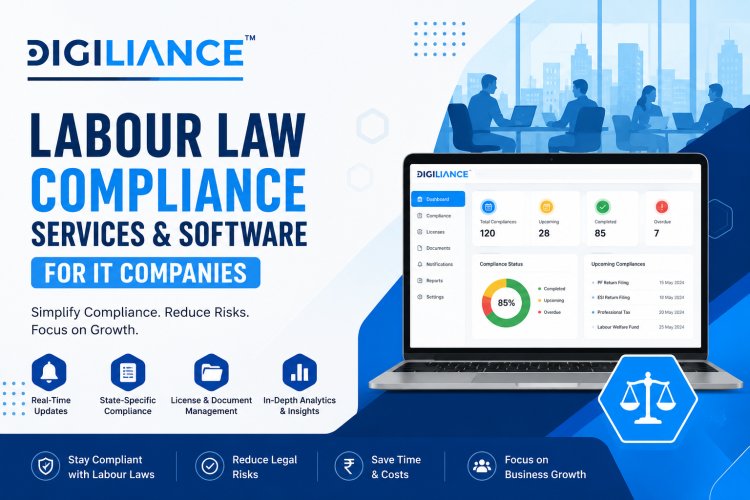
The Indian IT industry operates in a fast-paced business environment where managing talent, scaling teams, and delivering projects often take center stage. However, labour law compliance remains one of the most critical responsibilities for IT companies of all sizes. From employee onboarding and wage compliance to statutory filings and labour code updates, organizations must ensure that every aspect of their workforce management aligns with applicable laws.
As labour regulations continue to evolve across India, manual compliance management has become increasingly difficult. Multiple state-specific requirements, changing government notifications, and complex documentation obligations can expose organizations to penalties, legal disputes, and reputational risks.
This is where labour law compliance services and software play an important role. Modern compliance platforms help IT companies track obligations, monitor regulatory changes, manage licenses, and maintain complete compliance records from a centralized system.
In this guide, we explore how labour law compliance software and professional compliance services help IT companies simplify compliance management, reduce operational risks, and maintain business continuity while focusing on growth.
Book A Demo For Labour Law Compliance Software
What Is Labour Law Compliance for IT Companies?
Labour law compliance refers to the process of adhering to all applicable employment and workplace regulations issued by central and state governments.
For IT companies, compliance extends beyond employee salary processing. It includes maintaining statutory records, complying with labour codes, ensuring employee welfare, managing workplace policies, and meeting regulatory reporting requirements.
Some key compliance areas include:
- Minimum wage compliance
- Employee Provident Fund (EPF)
- Employee State Insurance (ESI)
- Professional Tax compliance
- Labour Welfare Fund contributions
- Shops and Establishments compliance
- Contract labour compliance
- Leave and attendance regulations
- Working hours and overtime compliance
- Statutory registers and records
- License renewals and registrations
Failure to comply with these requirements can result in fines, legal notices, operational disruptions, and increased regulatory scrutiny.
Why Labour Compliance Is Important for IT Companies
Legal Risk Management
Even technology-driven businesses are subject to labour laws. Non-compliance can lead to inspections, penalties, and litigation.
A structured compliance management process helps organizations identify obligations and complete them within prescribed timelines.
Employee Trust and Workplace Transparency
Employees expect organizations to comply with employment laws and provide fair working conditions.
Compliance supports:
- Accurate salary administration
- Timely statutory deductions
- Employee benefits management
- Transparent HR policies
- Fair leave practices
Business Continuity
Investors, clients, and enterprise customers increasingly assess compliance practices before entering partnerships.
Strong compliance processes help IT companies maintain credibility and avoid disruptions during audits or due diligence reviews.
Common Labour Compliance Challenges Faced by IT Companies
Managing Multiple State Regulations
Many IT companies operate development centers, branch offices, or remote teams across multiple states.
Each state may have different requirements regarding:
- Minimum wages
- Professional Tax
- Labour Welfare Fund
- Shops and Establishments rules
- Holiday notifications
Tracking these variations manually becomes difficult as the business grows.
Frequent Regulatory Updates
Labour laws are regularly amended through government notifications and policy changes.
Compliance teams often struggle to:
- Monitor changes
- Interpret new regulations
- Implement updates promptly
Missing a single regulatory change can create compliance gaps.
Documentation and Record Management
Organizations must maintain numerous documents, including:
- Employee records
- Compliance filings
- Registration certificates
- Renewal documents
- Inspection reports
Managing these records through spreadsheets and emails often leads to inefficiencies.
Compliance Calendar Tracking
Different compliance activities have different due dates.
Missing deadlines can result in penalties and notices from authorities.
A centralized compliance calendar helps organizations stay on schedule throughout the year.
How Labour Law Compliance Software Helps IT Companies
Centralized Compliance Management
Labour compliance software consolidates all compliance activities into a single platform.
Organizations can:
- Track compliance status
- Monitor upcoming deadlines
- Access compliance reports
- Store statutory documents
- Review pending actions
This reduces dependence on manual tracking systems.
Real-Time Regulatory Updates
One of the biggest advantages of modern labour law compliance software is access to real-time updates.
Organizations receive information regarding:
- Labour law amendments
- New labour codes
- Government notifications
- Revised statutory rates
- Policy changes
This helps compliance teams remain proactive rather than reactive.
Automated Compliance Tracking
Automation reduces human error and improves compliance accuracy.
Key capabilities include:
- Due date reminders
- Compliance alerts
- Renewal notifications
- Status tracking
- Audit preparation support
Automation allows HR and compliance teams to focus on strategic activities rather than repetitive administrative work.
State-Specific Compliance Monitoring
IT companies with operations across India require visibility into state-wise obligations.
Advanced compliance software enables organizations to track:
- Minimum wage rates
- Professional Tax rates
- Labour Welfare Fund requirements
- State-specific notifications
- Regional compliance obligations
This ensures compliance consistency across all business locations.
Key Features to Look for in Labour Compliance Software
Compliance Checklist Management
A compliance checklist serves as a roadmap for tracking obligations across departments and locations.
Organizations can monitor:
- Completed tasks
- Pending activities
- Due dates
- Compliance ownership
This creates accountability and improves compliance performance.
License Management
Many businesses hold multiple licenses and registrations.
A strong license management system helps organizations:
- Track expiration dates
- Schedule renewals
- Maintain documentation
- Prevent operational disruptions
Document Repository
Centralized document management enables businesses to securely store:
- Compliance certificates
- Statutory forms
- Government filings
- Audit reports
- Employee records
Easy access improves audit readiness and reduces administrative effort.
Reporting and Analytics
Compliance analytics provide visibility into organizational compliance health.
Useful reports include:
- Compliance status reports
- Missed deadline reports
- Renewal tracking reports
- State-wise compliance reports
- Audit preparation reports
These insights support better decision-making.
How Digiliance Supports Labour Law Compliance for IT Companies
Digiliance was created to help businesses simplify labour law compliance management through technology.
As a labour compliance platform developed by Spectra, Digiliance enables organizations to manage, monitor, and track compliance activities through a centralized digital system.
Real-Time Compliance Updates
Digiliance continuously tracks regulatory developments and provides timely updates related to labour laws and labour codes.
This helps organizations stay informed about changing compliance requirements.
State-Specific Compliance Intelligence
Businesses operating across multiple states can access state-wise compliance information including:
- Minimum wage rates
- Professional Tax rates
- Labour Welfare Fund rates
- State labour regulations
- Holiday notifications
This simplifies multi-state compliance management.
Comprehensive Resource Hub
Digiliance provides access to one of India's largest labour law resource repositories.
Organizations can access:
- Central labour laws
- State labour laws
- Statutory forms
- Compliance calendars
- Government portal links
- Regulatory documents
This reduces the time required to locate critical compliance information.
Compliance Tracking and Monitoring
The platform helps organizations monitor compliance activities through structured workflows and compliance dashboards.
Businesses can easily identify:
- Pending compliance tasks
- Upcoming deadlines
- Completed activities
- Compliance risks
License and Document Management
Digiliance helps organizations manage licenses, registrations, renewals, and compliance documents through a centralized repository.
This reduces document-related risks and improves operational efficiency.
Benefits of Labour Law Compliance Services for IT Companies
Reduced Compliance Risk
Professional compliance services help businesses identify potential gaps before they become legal issues.
Improved Operational Efficiency
Automation and centralized tracking reduce administrative workload.
Better Audit Readiness
Organizations can quickly access compliance records and supporting documents during audits and inspections.
Cost Savings
A structured compliance approach reduces dependence on multiple consultants and minimizes penalty-related expenses.
Scalability
As IT companies expand into new states and hire more employees, compliance software scales alongside business growth.
Labour Compliance and the Future of IT Businesses
The future of compliance management is increasingly digital. As labour regulations become more complex and businesses expand across multiple jurisdictions, organizations need efficient systems to manage compliance obligations.
Technology-driven compliance solutions help businesses maintain visibility, improve accountability, and stay aligned with evolving regulations.
For IT companies focused on innovation and growth, adopting labour law compliance software is no longer optional. It is becoming an essential part of operational governance and risk management.
Frequently Asked Questions
What is labour law compliance software?
Labour law compliance software is a digital platform that helps businesses track, manage, and monitor statutory compliance obligations, regulatory updates, licenses, filings, and compliance deadlines.
Why do IT companies need labour compliance software?
IT companies often operate across multiple states and manage large workforces. Compliance software simplifies tracking of labour laws, statutory requirements, and regulatory updates.
What are the benefits of labour law compliance services?
Labour law compliance services help organizations reduce legal risks, improve compliance accuracy, manage documentation, and stay updated with changing regulations.
How does compliance software reduce compliance risks?
Compliance software provides reminders, compliance tracking, document management, regulatory updates, and reporting tools that help organizations meet obligations on time.
Can labour compliance software support multi-state operations?
Yes. Modern compliance platforms allow businesses to manage state-specific labour laws, minimum wages, Professional Tax requirements, Labour Welfare Fund obligations, and other regional regulations from a single dashboard.
Conclusion
Labour law compliance is a critical responsibility for every IT company operating in India. Managing multiple regulations, changing labour laws, statutory filings, and state-specific requirements manually can be time-consuming and risky. Labour law compliance services and software provide a structured approach to managing these obligations while improving efficiency and reducing legal exposure.
Digiliance helps organizations simplify compliance through real-time updates, compliance tracking, license management, analytics, and access to one of India's most comprehensive labour law resource hubs. By adopting a modern compliance platform, IT companies can focus on innovation, growth, and employee success while maintaining confidence in their compliance framework.