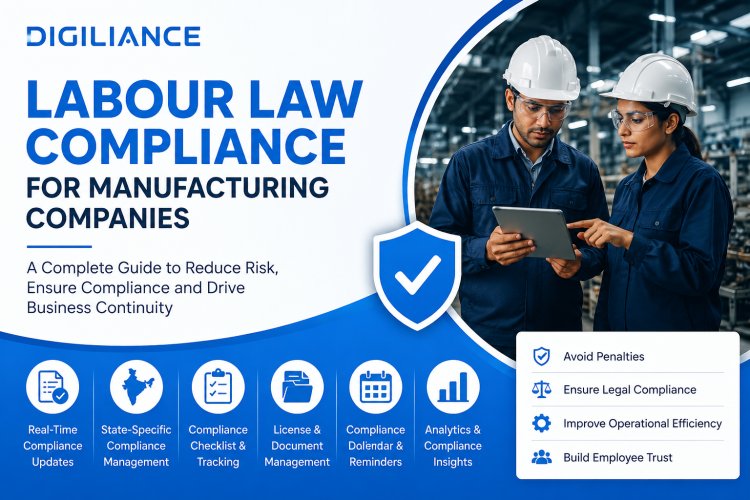
A missed compliance deadline. An expired factory license. An unnoticed minimum wage revision.
For manufacturing companies, even a small compliance oversight can lead to penalties, inspections, legal disputes, operational disruptions, and reputational damage. Unlike many other industries, manufacturers manage large workforces, shift operations, contract labour, workplace safety obligations, and multiple statutory requirements across different locations.
The challenge becomes even greater for organizations operating in multiple states, where labour regulations, minimum wage rates, professional tax requirements, labour welfare fund contributions, and holiday notifications can vary significantly.
This is why labour law compliance is no longer just an HR or administrative responsibility. It is a critical business function that directly affects operational continuity, workforce management, legal risk, and long-term growth.
In this guide, you'll learn everything manufacturing companies need to know about labour law compliance in India, including key regulations, compliance requirements, common challenges, practical compliance strategies, and how digital compliance platforms like Digiliance help businesses stay compliant with confidence.
What Is Labour Law Compliance for Manufacturing Companies?
Labour law compliance refers to the process of following all applicable employment, workplace, wage, social security, and statutory regulations governing an organization's workforce.
For manufacturing companies, compliance involves ensuring that employees receive their legal entitlements while the organization fulfills all reporting, registration, documentation, and filing obligations required by law.
Labour compliance typically covers:
- Minimum wages
- Employee Provident Fund (EPF)
- Employee State Insurance (ESI)
- Factory safety regulations
- Working hours and overtime
- Leave management
- Professional Tax
- Labour Welfare Fund (LWF)
- Contract labour compliance
- Statutory registers
- License management
- Government filings and returns
Whether you operate a textile manufacturing unit, automobile plant, pharmaceutical facility, FMCG factory, engineering workshop, or electronics manufacturing unit, compliance remains a non-negotiable requirement.
Why Labour Law Compliance Matters for Manufacturing Businesses
Many businesses view compliance as a legal obligation. While that is true, compliance also delivers operational and financial benefits.
Reduces Legal and Financial Risk
Non-compliance can lead to:
- Monetary penalties
- Interest liabilities
- Legal notices
- Labour disputes
- Regulatory investigations
Even a simple delay in statutory filings can create avoidable financial exposure.
Protects Business Continuity
Manufacturing operations depend on uninterrupted production schedules.
Compliance failures may result in:
- Inspection-related disruptions
- License complications
- Delays in approvals
- Increased regulatory scrutiny
Strong compliance practices help organizations avoid unnecessary interruptions.
Improves Employee Confidence
Employees expect employers to comply with labour regulations and provide statutory benefits.
When organizations consistently meet their obligations, they strengthen employee trust and workplace satisfaction.
Strengthens Corporate Governance
Investors, clients, and business partners increasingly evaluate compliance standards before entering into commercial relationships.
A compliant organization demonstrates accountability and responsible business practices.
Key Labour Laws Applicable to Manufacturing Companies
Manufacturing companies must comply with several central and state labour laws.
Factory Compliance Requirements
Manufacturing facilities are subject to workplace safety and operational regulations designed to protect employees and ensure safe working conditions.
Key areas include:
- Workplace hygiene
- Safety measures
- Emergency preparedness
- Working conditions
- Ventilation standards
- Welfare facilities
- Accident reporting
- Shift management
Manufacturing units should regularly review safety procedures and maintain all required records.
Minimum Wage Compliance
Every employer must ensure workers receive wages according to the latest government notifications.
Minimum wage compliance includes:
- Skill-based classifications
- Industry-specific rates
- State-wise wage revisions
- Wage register maintenance
- Timely salary payments
For example, a manufacturing company operating facilities in Maharashtra, Gujarat, and Tamil Nadu may need to monitor different minimum wage notifications for each state.
Employee Provident Fund Compliance
EPF provides retirement and social security benefits to eligible employees.
Employer responsibilities include:
- Employee registration
- Contribution deductions
- Employer contributions
- Monthly deposits
- Record maintenance
- Return filing
Failure to comply can result in penalties, interest charges, and legal proceedings.
Employee State Insurance Compliance
ESI provides healthcare and social security benefits to eligible employees.
Compliance requirements include:
- Employee enrollment
- Contribution payments
- Documentation maintenance
- Timely reporting
Proper ESI compliance ensures employees receive medical and financial support when needed.
Contract Labour Compliance
Contract labour plays a significant role in manufacturing industries.
Organizations engaging contract workers must monitor:
- Contractor licenses
- Labour deployment records
- Wage payments
- Attendance records
- Statutory compliance documentation
Many organizations underestimate contractor compliance risks. However, principal employers may face liability if contractors fail to meet legal obligations.
Payment of Bonus Compliance
Eligible employees must receive bonus payments according to applicable statutory requirements.
Employers should maintain:
- Bonus calculations
- Eligibility records
- Payment documentation
- Supporting registers
Labour Welfare Fund Compliance
Several states require Labour Welfare Fund contributions from employers and employees.
Compliance requirements vary based on:
- State regulations
- Contribution rates
- Filing schedules
- Payment deadlines
Professional Tax Compliance
Professional Tax obligations differ across states.
Employers must:
- Register where applicable
- Deduct taxes correctly
- Deposit payments
- File returns
Companies operating across multiple states often face additional complexity in managing Professional Tax compliance.
Manufacturing Compliance Challenges Most Companies Face
Manufacturing businesses operate in highly dynamic environments.
As a result, compliance challenges often increase as operations expand.
Managing Multiple Locations
A company with factories across different states must manage:
- State-specific labour laws
- Different wage rates
- Separate holiday lists
- Varying tax obligations
- Multiple filing requirements
Without centralized visibility, compliance gaps can easily occur.
Frequent Regulatory Changes
Labour laws and government notifications are updated regularly.
Organizations relying on manual tracking often struggle to keep up with:
- Wage revisions
- Labour code developments
- Statutory amendments
- Filing requirement changes
Contractor Workforce Management
Manufacturing facilities frequently engage contractors for production, maintenance, logistics, housekeeping, and security functions.
Monitoring contractor compliance manually is time-consuming and prone to error.
Documentation Challenges
Manufacturing organizations generate significant compliance documentation, including:
- Wage registers
- Attendance records
- EPF records
- ESI records
- Inspection reports
- License documents
- Safety records
Poor document management can create serious compliance risks during inspections.
License Renewal Tracking
Factories often maintain multiple licenses and registrations.
Missing a renewal deadline can create operational and legal complications that affect business continuity.
Labour Law Compliance Checklist for Manufacturing Companies
A structured compliance checklist helps organizations stay on track.
Workforce Management
- Verify employee records
- Maintain attendance registers
- Monitor working hours
- Track overtime
- Maintain leave records
Payroll Compliance
- Review minimum wage notifications
- Verify salary calculations
- Ensure timely wage payments
- Maintain wage registers
Social Security Compliance
- Monitor EPF contributions
- Monitor ESI contributions
- Verify employee coverage
- Maintain statutory records
Factory Compliance
- Conduct safety reviews
- Maintain emergency procedures
- Monitor workplace conditions
- Record incidents and accidents
Contractor Compliance
- Verify contractor registrations
- Monitor labour deployment
- Review wage payments
- Maintain documentation
License Management
- Track expiry dates
- Schedule renewals
- Maintain digital records
- Monitor approval status
How Technology Is Changing Labour Compliance Management
Traditional compliance processes often rely on spreadsheets, emails, physical files, and manual reminders.
While this approach may work for smaller businesses, it becomes increasingly difficult as organizations grow.
Digital compliance management platforms provide:
- Centralized compliance tracking
- Automated reminders
- Regulatory updates
- Document management
- Compliance dashboards
- Reporting and analytics
Technology helps businesses reduce manual effort while improving visibility and control.
How Digiliance Helps Manufacturing Companies Stay Compliant
Digiliance is a labour law compliance software platform designed to simplify compliance management for businesses across India.
Built to address modern compliance challenges, Digiliance helps organizations plan, manage, monitor, and track compliance activities through a centralized platform.
Real-Time Compliance Updates
Labour laws change frequently.
Digiliance helps businesses stay informed about important regulatory developments, amendments, and compliance updates that may impact operations.
State-Specific Compliance Intelligence
Manufacturing companies often operate across multiple states.
Digiliance provides access to:
- State-wise minimum wages
- Professional Tax rates
- Labour Welfare Fund rates
- Leave regulations
- Holiday notifications
This helps organizations maintain compliance across all locations.
Compliance Checklist Management
The platform provides structured compliance tracking that helps businesses monitor obligations and reduce the risk of missed deadlines.
License and Document Management
Managing licenses manually often leads to missed renewals and document retrieval challenges.
Digiliance simplifies:
- License tracking
- Renewal management
- Document storage
- Compliance documentation
Compliance Calendar
The built-in compliance calendar helps businesses track important due dates and filing requirements throughout the year.
India's Largest Labour Law Resource Hub
One of Digiliance's most valuable features is its extensive labour law repository.
Businesses gain access to:
- Central labour laws
- State labour laws
- Statutory forms
- Compliance documents
- Government resources
- Compliance reference materials
Compliance Analytics and Reporting
Organizations can evaluate their compliance status through reporting and analytics tools that help identify compliance gaps before they become serious issues.
Need Help Managing Labour Law Compliance?
Managing labour law compliance across multiple manufacturing facilities, contractors, and regulatory frameworks can quickly become overwhelming.
Digiliance helps manufacturing companies simplify compliance management through real-time labour law updates, compliance checklists, license tracking, document management, compliance calendars, and state-specific compliance intelligence.
Whether you operate a single manufacturing plant or multiple facilities across India, Digiliance provides the visibility and control needed to stay compliant, reduce risk, and improve operational efficiency.
Explore Digiliance's labour law compliance platform to understand how your organization can simplify compliance management and stay ahead of changing labour regulations.
Preparing for India's New Labour Codes
As India's labour law landscape continues to evolve, manufacturing companies should proactively prepare for future compliance requirements.
Organizations should focus on:
- Reviewing existing compliance processes
- Updating policies and procedures
- Improving documentation practices
- Monitoring regulatory developments
- Strengthening compliance governance
- Adopting compliance technology
Businesses that prepare early will be better positioned to adapt to future regulatory changes.
Conclusion
Labour law compliance is no longer just a legal requirement. For manufacturing companies, it is a business-critical function that affects workforce management, operational continuity, legal exposure, and organizational reputation.
As manufacturing operations grow and compliance requirements become more complex, relying on spreadsheets and manual processes is no longer sufficient.
A proactive approach supported by modern compliance technology can help organizations stay compliant, reduce risk, improve efficiency, and maintain confidence during inspections and audits.
By combining strong internal compliance processes with a comprehensive labour law compliance platform like Digiliance, manufacturing companies can build a more resilient, compliant, and future-ready business.
Frequently Asked Questions
What is labour law compliance in manufacturing?
Labour law compliance in manufacturing refers to adhering to all applicable labour regulations, including wage laws, social security requirements, workplace safety standards, statutory filings, and employee benefit obligations.
Why is labour compliance important for manufacturing companies?
Labour compliance helps businesses avoid penalties, reduce legal risks, maintain operational continuity, improve employee trust, and meet statutory obligations.
What are the main labour laws manufacturing companies must follow?
Manufacturing companies typically manage compliance related to minimum wages, EPF, ESI, factory regulations, contract labour requirements, Professional Tax, Labour Welfare Fund, and statutory documentation.
How can companies manage compliance across multiple states?
Businesses can use centralized labour law compliance software that provides state-specific updates, compliance tracking, document management, and reporting capabilities.
What is the easiest way to manage labour law compliance?
For most manufacturing businesses, using a centralized labour law compliance software platform is the most efficient approach. Solutions such as Digiliance help organizations track compliance activities, monitor regulatory updates, manage licenses, maintain statutory documents, and stay aligned with state-specific labour regulations from a single dashboard.